A Scripture study about immortal life

Sex in Heaven?

Did God create sexuality only for a short mortal life—or is embodied love, beauty, intimacy and pleasure part of His eternal purpose?

An honest Bible study: what Scripture says directly, what it suggests, and what remains a matter of interpretation.

Begin with what God called good

Sex was not invented by sin, pornography, lust or the modern world. Male and female, bodily union, fruitfulness and family appeared in God’s creation before the Fall.

The central argument of this page: Scripture clearly teaches that sexuality was created by God and can be holy. Scripture also teaches that resurrected people do not enter earthly marriage contracts. It does not explicitly describe sexual relations in the eternal state. Therefore, continued sexuality in immortal bodies is a theological inference—not a verse that should be presented as a direct quotation from God.

1. Male, female and fruitfulness were blessed

The first command given to humanity was not shame, celibacy or escape from the body. It was blessing, union, fruitfulness and stewardship.

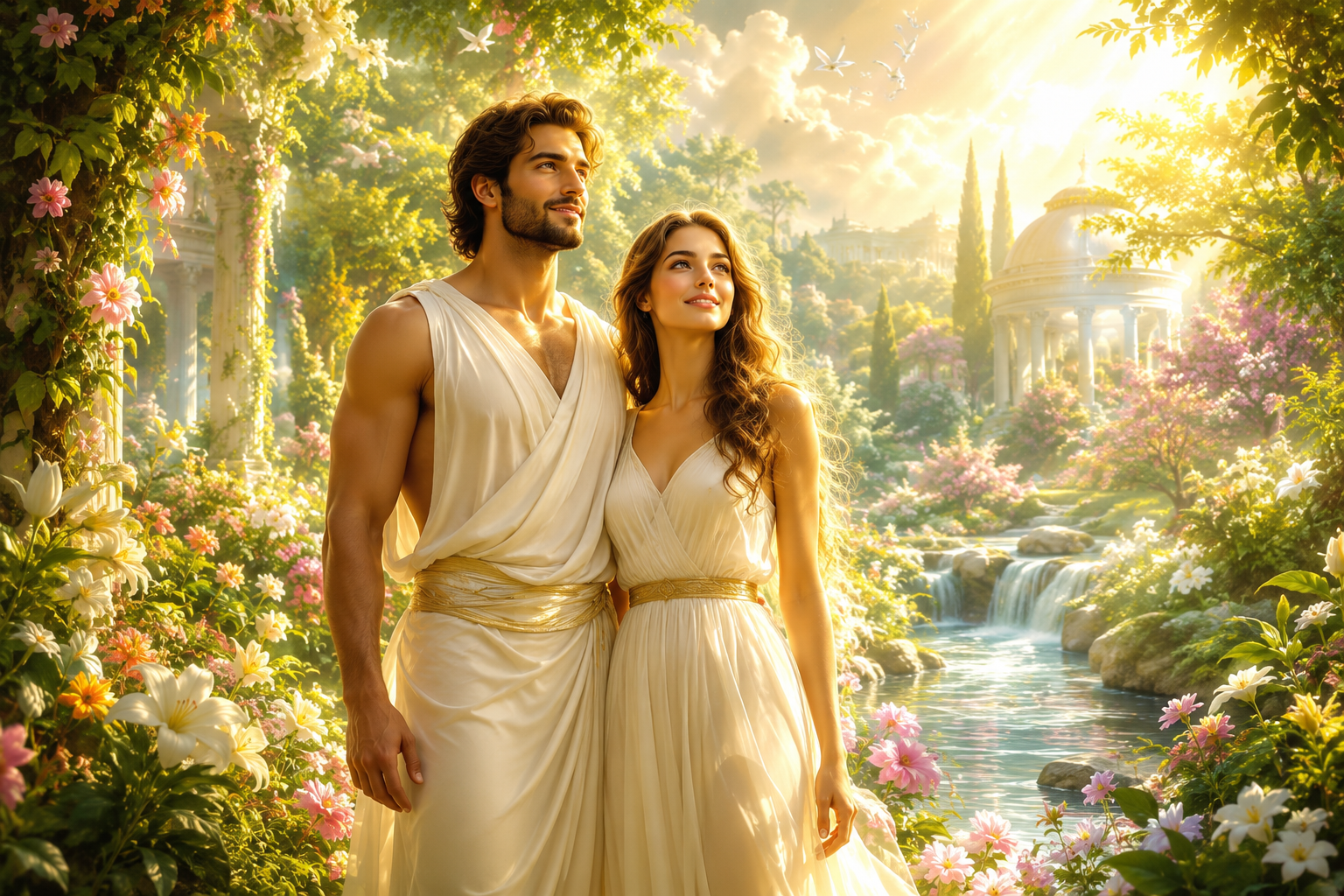
A man and woman standing in a radiant garden
Direct Scripture

Created male and female

“Male and female created he them. And God blessed them… Be fruitful, and multiply.”

Sexual difference and fruitfulness were included in creation’s original blessing, before corruption entered human experience.

Read Genesis 1:27–28 ↗
A husband and wife walking together beneath golden trees
Direct Scripture

The two become one flesh

“They shall be one flesh.”

The body is not treated as an embarrassing shell. Physical union is woven into companionship, love and shared life.

Read Genesis 2:18–25 ↗

2. Naked and unashamed

Before sin, the first couple possessed innocence without bodily shame. Shame entered after disobedience; it was not part of God’s original design.

Adam and Eve portrayed modestly in a peaceful garden
Direct Scripture

Innocence before corruption

“They were both naked, the man and his wife, and were not ashamed.”

The Garden presents nakedness without exploitation, fear or lustful corruption. The problem was never that God had created bodies. The problem came when sin damaged how human beings saw God, one another and themselves.

Read Genesis 2:25 and 3:6–11 ↗

3. The Bible does not treat marital pleasure as dirty

Scripture condemns exploitation, adultery, coercion and uncontrolled lust. It does not condemn loving sexual pleasure within the covenantal order given to mortal humanity.

A loving couple in a vineyard at sunset
Poetry of Desire

Song of Songs

An entire biblical book celebrates attraction, beauty, longing, delight and mutual desire. Its poetry shows that embodied love is capable of holiness.

Read Song of Songs ↗
A married couple rejoicing together in warm light
Joy, Not Shame

Rejoice in loving intimacy

“Rejoice with the wife of thy youth.”

Proverbs speaks positively and frankly about marital delight rather than pretending that physical pleasure is spiritually inferior.

Read Proverbs 5:15–19 ↗
Paul’s Counsel

Do not deprive one another

Paul permitted temporary abstinence by mutual agreement for prayer, followed by reunion. His warning was directed against temptation and lack of self-control—not against loving intimacy itself.

Read 1 Corinthians 7:2–5 ↗
Creation Is Good

Rejecting God’s gifts can become false religion

Paul warned against teachings that forbid marriage and reject created gifts that are to be received with thanksgiving.

Read 1 Timothy 4:1–5 ↗
Important: The Bible records polygamy among patriarchs and kings, but recording something is not the same as endorsing it. Those stories frequently reveal jealousy, rivalry, grief and family division. They show that Scripture is honest about human sexual history—not that every recorded arrangement is God’s eternal ideal.

4. Genesis 6: angels, women and the Nephilim?

One ancient interpretation identifies the “sons of God” as heavenly beings who took human women and fathered offspring. Other interpreters understand them as human rulers or the line of Seth.

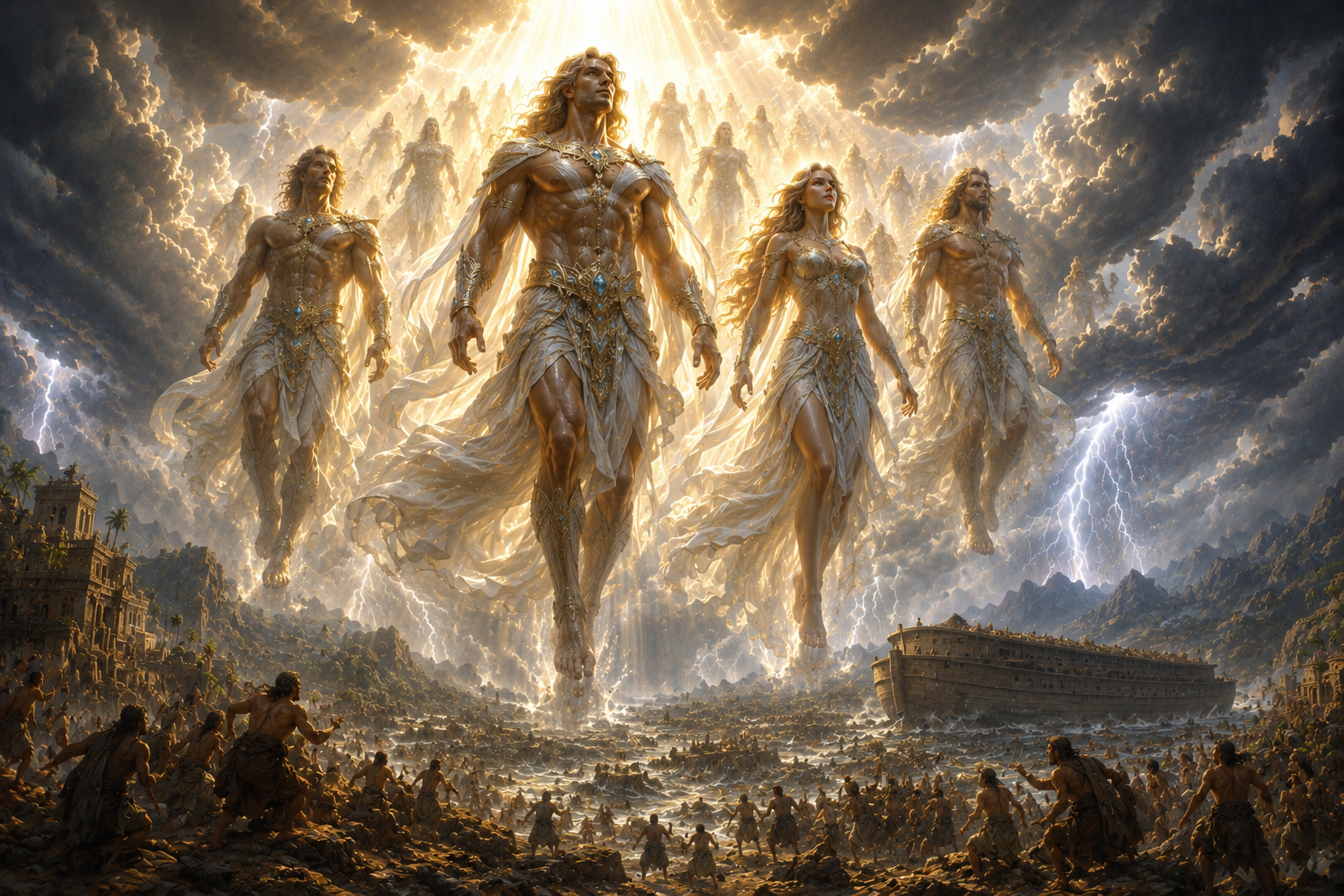
Mysterious heavenly beings descending toward the ancient world
A Contested Passage

The sons of God and daughters of men

“The sons of God came in unto the daughters of men, and they bare children to them.”

Genesis 6 can support the view that some heavenly beings possessed or assumed reproductive capability. However, the event is presented in the setting of rebellion and judgment, not as a model of righteous heavenly life.

Read Genesis 6:1–4 ↗
Related Texts

Angels who left their proper place

Jude and 2 Peter describe angels who sinned and were kept for judgment. Many readers connect these passages with Genesis 6, although the connection is interpretive rather than explicitly stated.

Read Jude 6–7 and 2 Peter 2:4–5 ↗

The watching heavenly assembly

Scripture presents angels as observing God’s work among humanity and rejoicing over repentance. That does not prove every angel watches every person continuously, but it does show heavenly awareness of earthly redemption.

Read the watching-angel passages ↗

5. Resurrection is transformation—not the destruction of embodiment

Christian hope is not that human beings become bodiless ghosts. The dead are raised incorruptible, powerful and immortal.

A radiant resurrected person standing in golden light
Direct Scripture

A spiritual body is still a body

“It is raised in incorruption… it is raised in power… there is a spiritual body.”

“Spiritual” in Paul’s argument does not mean unreal or nonphysical. It describes a body fully animated and governed by God’s Spirit, no longer ruled by corruption and death.

Read 1 Corinthians 15:35–54 ↗
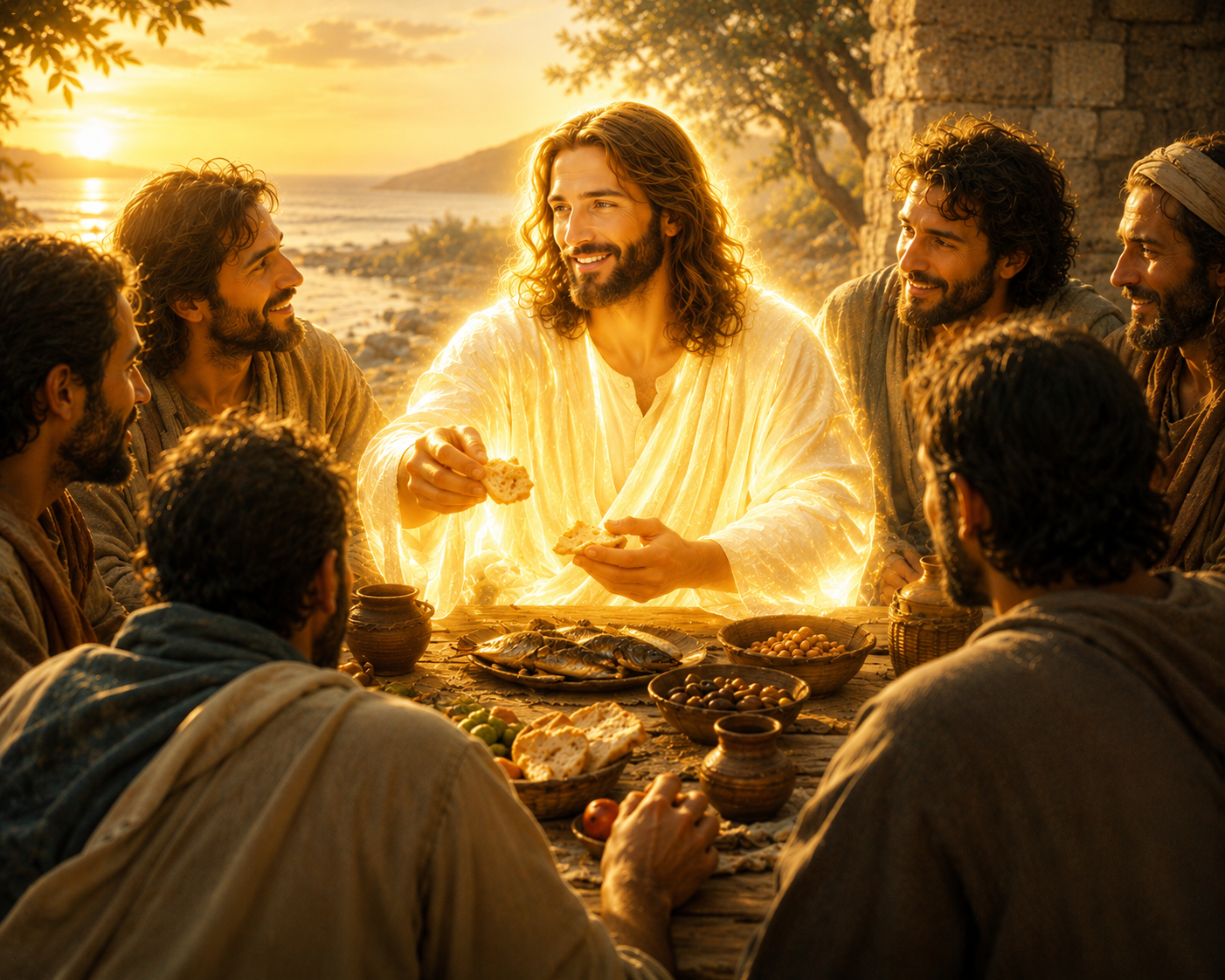
The resurrected Yeshua sharing food with His disciples
Yeshua’s Example

Recognisable, touchable and able to eat

The resurrected Yeshua could be seen and touched. He showed His wounds and ate with His disciples. His body was transformed, yet remained genuinely embodied.

Read Luke 24 and John 20 ↗
The resurrection-body passages establish continuity, embodiment, identity and incorruptibility. They do not list every organ or every future bodily function. Saying that resurrected bodies retain sexual capacity is therefore possible as an inference, but it cannot honestly be called an explicit biblical statement.

6. What did Yeshua mean by “neither marry”?

This is the central passage in the discussion, and it must be faced directly rather than avoided.

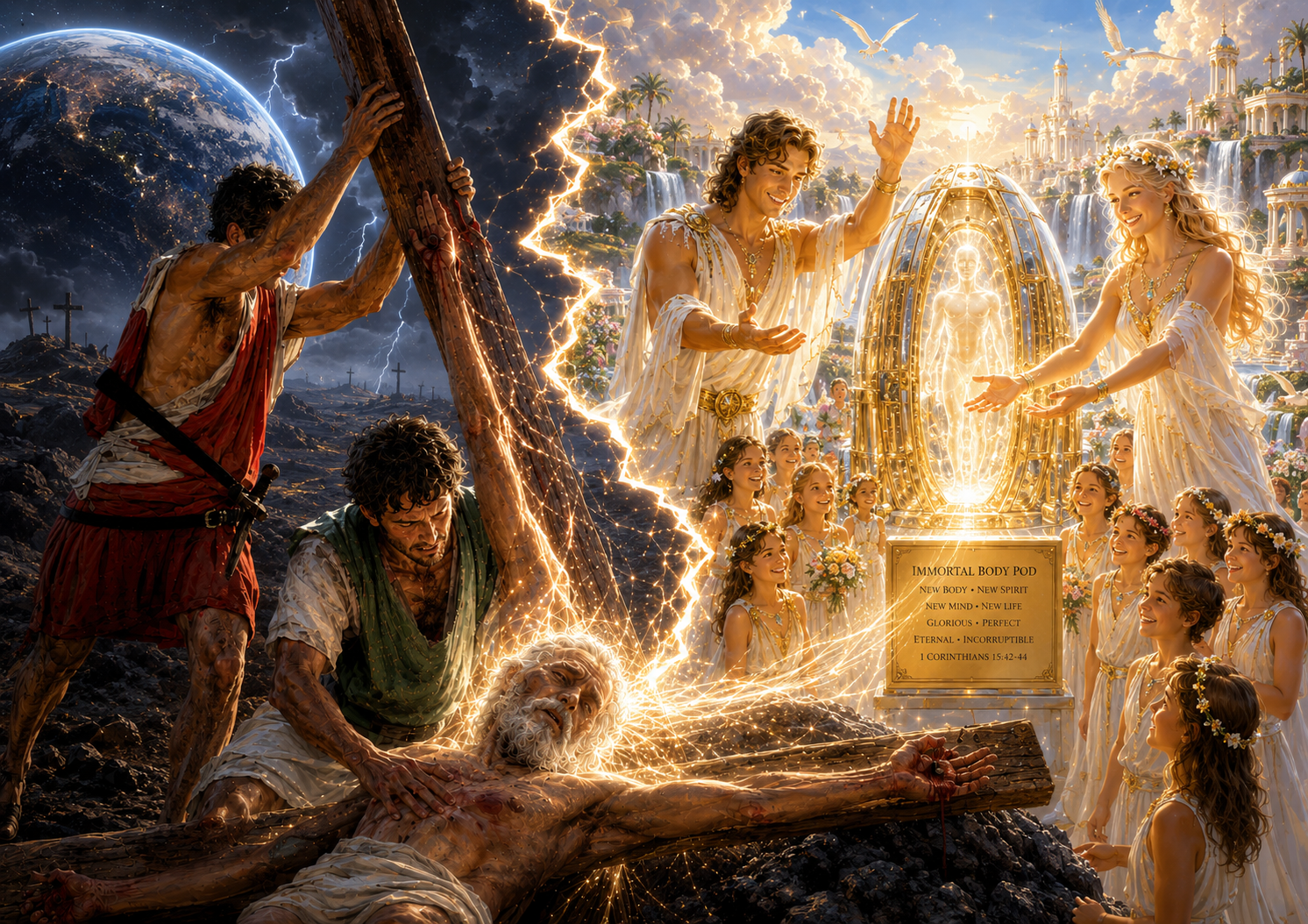
A vast joyful family gathered in the Kingdom of God
Direct Scripture

No earthly marriage arrangement in the resurrection

“In the resurrection they neither marry, nor are given in marriage, but are as the angels of God in heaven.”

Yeshua answered a question about which husband would possess a woman who had been married successively to seven brothers. His answer removes the mortal legal structure that made the question possible.

At minimum, the passage teaches that resurrection life is not organised through earthly marriage contracts, inheritance arrangements and exclusive household units in the same way mortal society is.

What it does not explicitly say is: “resurrected bodies have no sex organs,” “there is no attraction,” or “all embodied pleasure disappears.” Those conclusions go beyond the words of the passage.

Read Matthew 22:23–33 and Luke 20:27–38 ↗

What Scripture directly establishes

There is resurrection, immortality, continuing personal identity, real embodiment and no continuation of earthly marriage as a mortal institution.

What this doctrine proposes

Immortal people may retain sexuality and share intimacy without ownership, jealousy, death, reproductive defect, coercion or exclusive social divisions.

7. Children appear in prophetic Kingdom pictures

Prophets describe restored creation with children, families, safety and fruitfulness. The timing and fulfilment of these texts are debated: many place them in the Messianic millennium rather than the final New Jerusalem.

A child peacefully leading a lion and lamb
Kingdom Prophecy

A little child shall lead them

Isaiah’s peaceful Kingdom vision includes children living safely amid a restored creation.

Read Isaiah 11:6–9 ↗
Children joyfully playing in the streets of a peaceful city
Restoration Prophecy

Children playing in the streets

Zechariah pictures restored Jerusalem filled with old people and children, expressing security, continuity and communal joy.

Read Zechariah 8:3–8 ↗
Handle Carefully

Isaiah’s “new heavens and a new earth”

Isaiah 65 describes childbirth, long life and death within a renewed world. Because death is still present in the chapter, many interpreters understand this as the millennial Kingdom or prophetic imagery—not the final deathless state of Revelation 21–22.

Compare Isaiah 65 with Revelation 21 ↗

8. Perfect life without genetic corruption

Genesis begins with one human family. Scripture does not describe Adam and Eve using modern genetic language, but the early narrative necessarily involves close kinship as humanity multiplies.

A proposed explanation is that the earliest human genome was less damaged by accumulated mutation, making early close-relative unions biologically unlike such unions today. That idea may be compatible with the narrative, but the Bible never states, “Adam and Eve had perfect DNA.” It should be presented as a reasoned model, not as a quoted doctrine.
A reasoned conclusion

God is not against the body—He is against corruption

The Bible presents sex as part of God’s good creation. It can express union, delight, fruitfulness and covenant love. Sin twists it into lust, control, betrayal, violence and exploitation. Redemption does not mean that God hates what He created; it means that He removes corruption from His creation.

Yeshua clearly taught that resurrected people do not marry or enter marriage in the mortal way. Yet He did not say that immortal bodies become sexless, that sexual identity disappears, or that every form of intimate pleasure is abolished.

Therefore this page proposes—not dogmatically proves—that immortal “superbodies” may retain the beauty and capacity of sexuality while being entirely free from lust, ownership, jealousy, disease, genetic damage, rejection, abuse and death.

Heaven is not less alive than Earth. It is life made complete. Every pleasure consistent with perfect love belongs to God; every corruption that injures another person is excluded from His Kingdom.

“Father, teach us not to call Your creation dirty, and not to call corruption holy. Give us wisdom to distinguish pure love from selfish desire, and prepare us for a Kingdom where nothing harms, deceives, possesses or destroys. Amen.”

This article presents a theological interpretation. Readers are encouraged to examine every linked passage and prayerfully reach their own conclusion. As for me: Paul Zerubbabl. I say YES 100% we have childern in heaven.